

Gill Landry will be back in Norway this August, see picture of dates at the end of this article. In connection with his upcoming visit to Norway, I have had a chat with him. Join in, and you will learn about interesting aspects of his songwriting, some of his latest songs and sources of inspiration.
Gilbert John Landry is an American singer-songwriter and guitarist, born in Lake Charles, Louisiana. He is a former member of Old Crow Medicine Show and a founding member of the Kitchen Syncopators.
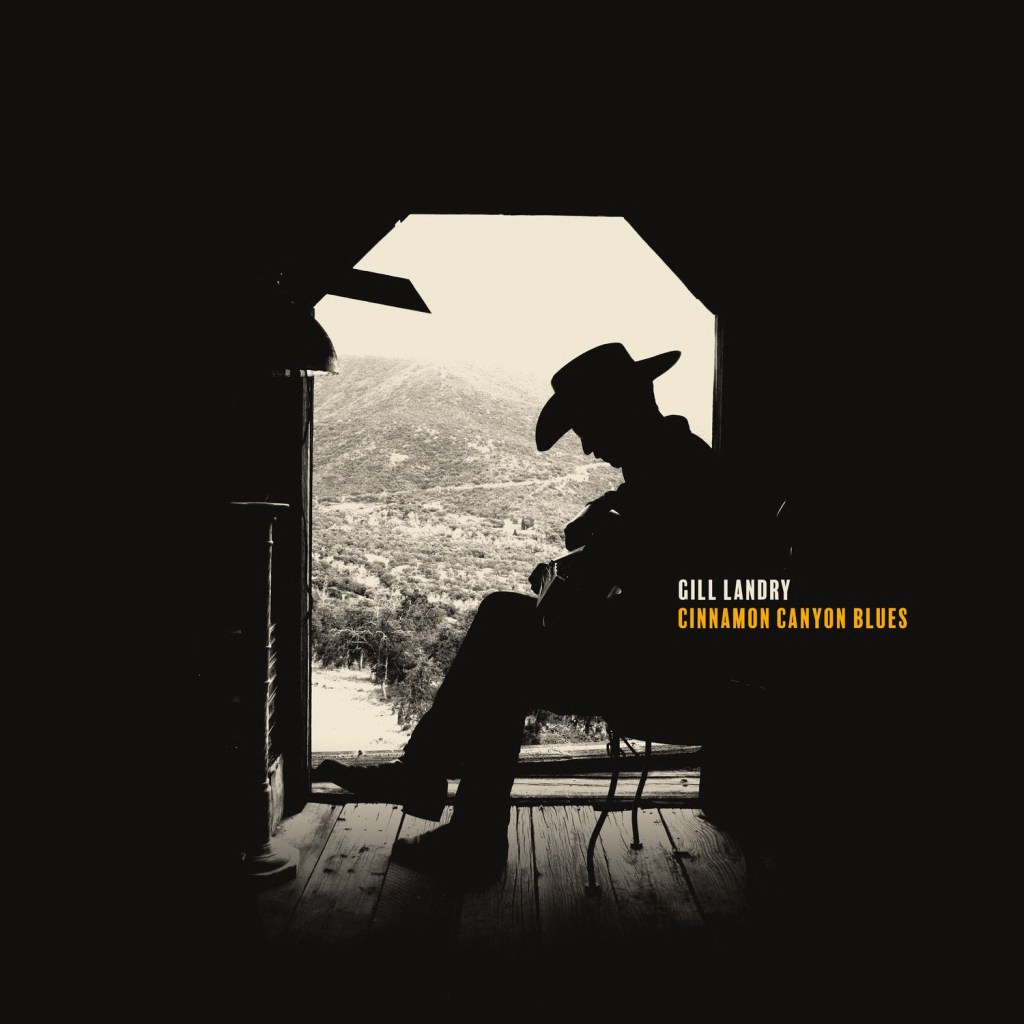
When I reviewed Gill Landry’s new album last year—his eighth solo release—I wrote that Gill Landry is one of the best I know at turning blue emotions into slow-moving and beautiful melodies that lift you into music’s upper realms. He sets you down there, dazed but deeply satisfied. There are a couple of songs like that on his new record, Cinnamon Canyon Blues. At least a couple.
Welcome back to Norway, Gill. It has been seven years since I was impressed by your songs, voice, and guitar playing at the now-closed Café Mono in Oslo. Others spoke of a magical experience during a garden concert out in the woods near Skarnes. Do you remember those concerts?
I do remember those concerts. I’m a big a fan of your country, it is a truly stunning place.
Since then, you have released two albums that stand tall in my book: Skeleton At The Banquet (2020) and Cinnamon Canyon Blues. You wrote the songs for Skeleton At The Banquet while living in France, and the songs for Cinnamon Canyon Blues came to life at the foot of the Sierra Nevada.
If I have understood correctly, you lived in relative isolation during the songwriting process. Why did you feel the need to isolate yourself? “Looking for a place they call home,” you sing in one of your songs. Is that about you—and do you have a home now?
Well, the isolation I was in while writing Cinnamon Canyon Blues was pandemic related, so I would not say I felt the need to, but I do find that is easier when working on an album or set of ideas to see them through as uninterrupted as possible. Then I am able to sit with them and let them ferment or distill themselves, so to speak.
‘The Place They Call Home’ is not about me specifically, it more speaks to the plight of the American underdog scene which I have always been deeply related to. I do not have a home as of now, I can not say that I have had one in some time. I have come to embrace the reality that I may never have one other than a ‘where I hang my hat or the heart is’ type version.

On your last two albums, you have crafted a distinctive sound. Piano, guitars, wind instruments create a beautiful blue atmosphere. Though you arrange the instruments in different ways, it is unmistakably Gill Landry we are hearing. You shift between mid-tempo tunes and some truly stunning slow songs. Could you say something about your musical evolution through the bands you have played in and your solo albums?
Thank you. Well, when I started out playing folk music on the street, we played a wide variety of songs styles and genres from the 20’s and 30’s. When we would make an album back then, I would select as diverse an array of these songs for a diverse mixtape or what you’d now call playlist of an album. I realized through this that since each song had the same players on the same instruments, no matter how far afield we travelled, style wise it kept a cohesive sound, and having a fairly wide field of interest, I carried that over into my own writing and recording.
I never know exactly how I’m going to approach a record, it reveals itself through the process. The outcome is often related to when, where, who is around, and how much money there is for it. Since I do not often have much of a budget for recording or a steady band, I rely on the talents and generosity of friends who are around when and where I am recording and believe in me or my work enough to give their time at a fraction of their rate or some form of trade. I have been fortunate to make friends with some very talented people I love and admire over the years, and their contributions have greatly influenced the feel of each record. I have always been grateful for that. Once someone signs on, I tend to let them express themselves in their voice on their instrument as freely as they like unless they ask for direction or I happen to have a specific feel I’m going for. I feel that gives their playing more of a freeing quality. That trust and respect I feel has gone a long way. Just an openness to what serves the song and its mood.
In Norway, you are playing solo. Is it challenging to adapt the songs from your latest albums to a solo format?
I do not find it a challenge as they are all written solo and built up from there on the recordings. Some of the songs do end up becoming so defined by the recording to me that I retire them from any solo sets, but since most of them are written alone in a room with a guitar or piano it makes for an easy transition. I would argue they can be more powerful in their stripped-down intimate form in many ways.
A lot has happened since I saw you play in Norway back in 2017. I interpret Skeleton At The Banquet as a commentary on the USA, as seen from your time in France. At the same time, the lyrics also lend themselves to more personal interpretations. What inspired the lyrics on that album? And I have to ask about the instrumental that closes the record, Portrait Of Astrid (a Nocturne)—who is Astrid?
You nailed it, it was meditations on what was happening in the US from a fairly calm, centered human existence in a sleepy village on the shores of Western France with one or two musings on love. Astrid is a dream I have been holding on to. The carrot on a stick muse that moves the universe.
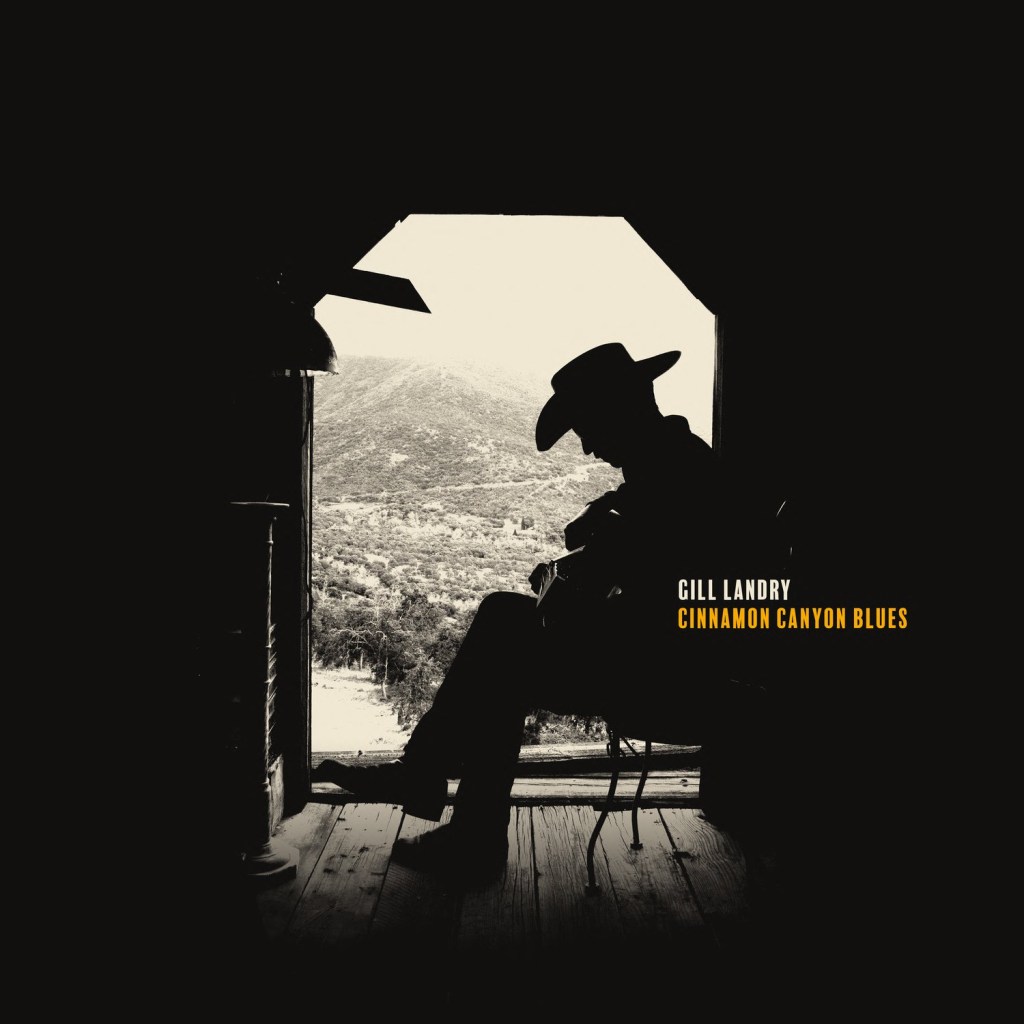
Now we move on to your latest album, Cinnamon Canyon Blues. Do your new album get recognition in the States and beyond? In what ways does it differ from its predecessor, both thematically and musically?
My albums get recognition with the people that dig them and that is all that really matters to me and I am always happy to hear if they have touched or helped anyone in any way. I am not an industry guy. I could not find a label in the States that would put either of these albums out so I started my own label.
One main way this recent album differs from ‘Skeleton At The Banquet’ is that it is more personal in many ways. It was born from connections I had made to myself and nature while living on the mountain over those years. I feel like I made some breakthroughs in my own heart and mind and a lot of this writing was an attempt to find the words for these new ways of looking at things. It is also the closest thing to a live in studio production I have made in many years with all principle instruments playing live together, which gives it a swagger that is really only possible in that way.

You sing:
“We all need something to believe in It’s hard to get there on your own//There’ll be time enough for grieving//Don’t let your heartaches turn to stone”
Is this typical of where you were emotionally and mentally when writing the songs? It seems the somewhat solitary life during the songwriting process led to a realization that living in isolation is not the answer. There is also a subtle optimism in the song—like the title suggests—Broken Hearts Keep Beating?
I think of myself as a realist, but the default perspective for most of my life has been that of an optimistic idealist which carries a rub against reality. The tortured aspects one might hear on any given song is always me leaning toward an understanding. There is no typical place that I come from when writing songs, it is quite honestly all still a bit of a mystery to me how I get to the songs that I really like. I remember writing them, I know the various tools and ways of being I use to get there, but I am still always pleasantly surprised when I get something that I sing a week after ‘finishing’ it and still feel good about it. It’s never guaranteed.
The album is packed with great songs. Still, three or four of them competed for a spot on my list of favorite tracks from 2024. At the same time, the cohesion of the album elevates these songs (I should mention I have listened to it several times over the past few days, and the minor criticisms I had when I wrote about it a year ago have all but disappeared). Are there songs on the album you are especially proud of? Were there any that were particularly challenging to finish, to get just right?
Every song is a challenge to get ‘just right’ and just like a painting they could easily never be finished as one’s perspective and awareness changes over time. Except for the recordings of them being fixed to tape, perhaps they are not finished. That said, I am happy with the whole album as a piece and there is little I would change. Since I am not influenced by any one genre or style, a label, or the expectation of popular appeal when approaching an album, I am usually consciously aiming for them to be stylistically diverse but still a cohesive body of work that flows through the ideas.
I can reveal that among my favorites from the album are Broken Hearts Keep Beating, The Ferryman, and Bedroom Of Stars. Do you have anything specific to say about these, or any other songs from the album?
Those are some of my favorites as well. A friend let me use Leonard Cohen’s ‘hotel keyboard’ which was a small Casio with pre-programmed rhythm and bass tracks and the first time using it ‘The Ferryman’ wrote itself. The whole arrangement came out of the thing within the first hour of messing with it. ‘Bedroom of Stars’ is one I was particularly happy with as I’ve always had a deep compassion for the homeless. I spent many years travelling homeless and close to the ground myself and I have a great amount of empathy for their plight and the system they’re up against. I wanted to humanize the experience of a homeless couple moving through a day in Los Angeles and I feel like it found its way. Broken Hearts Keep Beating is just a phrase I heard a friend say, and it hit me with its gravity and beauty and related to a longing I was suffering at the time.
In my review of your latest album, I wrote that your lyrics are free of clichés and rich in imagery. I have previously compared you musically to artists like Jackie Leven and Leonard Cohen. Are there musicians and lyricists who have particularly inspired you over your life—and in recent years? Are you inspired by other art forms like literature?
I an a lyrics guy. If a song has great lyrics but a boring, cliché, nothingburger melody, I will still love it. If a song has the most amazing melody in the world but bad, cliché, dead-hearted writing, I feel like I would rather never hear another song for the rest of my life than be forced to listen to it. I have been inspired over the years by artists I have felt to be inventive, heartfelt, soulful writers where the heart-mind-pen connection feels like a clear searching channel, and there have been many. Speaking of cliché; Bob Dylan was my first love and you will know most all the top names such as Leonard Cohen, John Prine, Woody Guthrie, Tom Waits, Neil Young, Bob Marley, Randy Newman, Merle Haggard, Townes Van Zandt, Lucinda Williams, Hank Williams, Robert Johnson, Gillian Welch, Chuck Berry, Robert Hunter, David Bowie, Bruce Springsteen, Warren Zevon, Willie Nelson, Lou Reed, Michael Hurley, Louis Jordan, Richard ‘Rabbit’ Brown, Blaze Foley, and if I were to write everyone who even written just one song that have deeply affected me, I could go on for pages.
What kind of questions do you wish you were asked—and what would your answer be?
The Question: How would you like to be given a house in the country with a recording studio and all the paints and instruments you need to keep on the creative road for the rest of your life?
My Answer: Yes, please.
As you can tell, I am very fond of your last two albums. They are beautiful and dark—the latest I even called a “night album”—yet they are not completely devoid of hope. You have also made great songs before these. During your concerts in Norway, will we also hear older tracks like Funeral At My Heart and Take This Body, to name two of my favorites?
Oh yeah, of course. It is always my desire to write songs that are built to last, and there are at least a few from every album that have stood the test of time for myself and I will probably be able to perform as long as I’m around.
Once again, welcome to Norway, Gill! We Are thrilled that you are coming.
Thank you.

 Gubberock